
Recommended spots
-
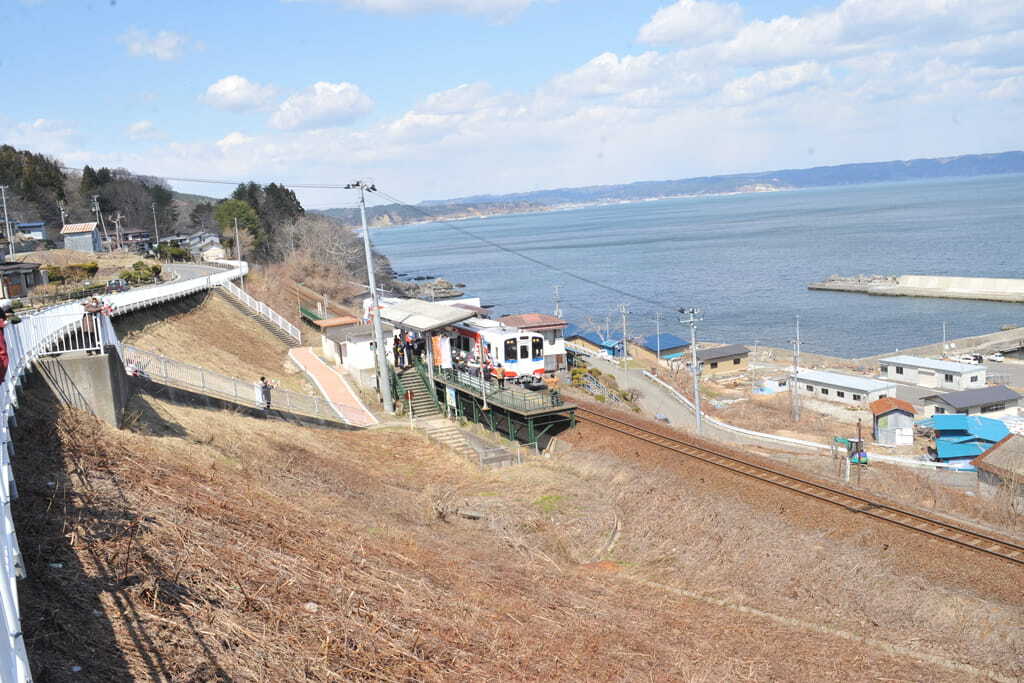
Sanriku Railway Horinai Station
Located at the northern gateway of Fudai Village, this station is known as a filming location for the popular Japanese TV drama Amachan. In the drama, it appeared as “Sodegahama Station” and served as the nearest station used by the protagonist Aki for commuting to school. It is beloved by fans as the setting of the famous scene where she shouts her dreams toward the tunnel. With longer train stops arranged to accommodate tourist photography, it offers visitors a chance to immerse themselves in the world of the drama.
-
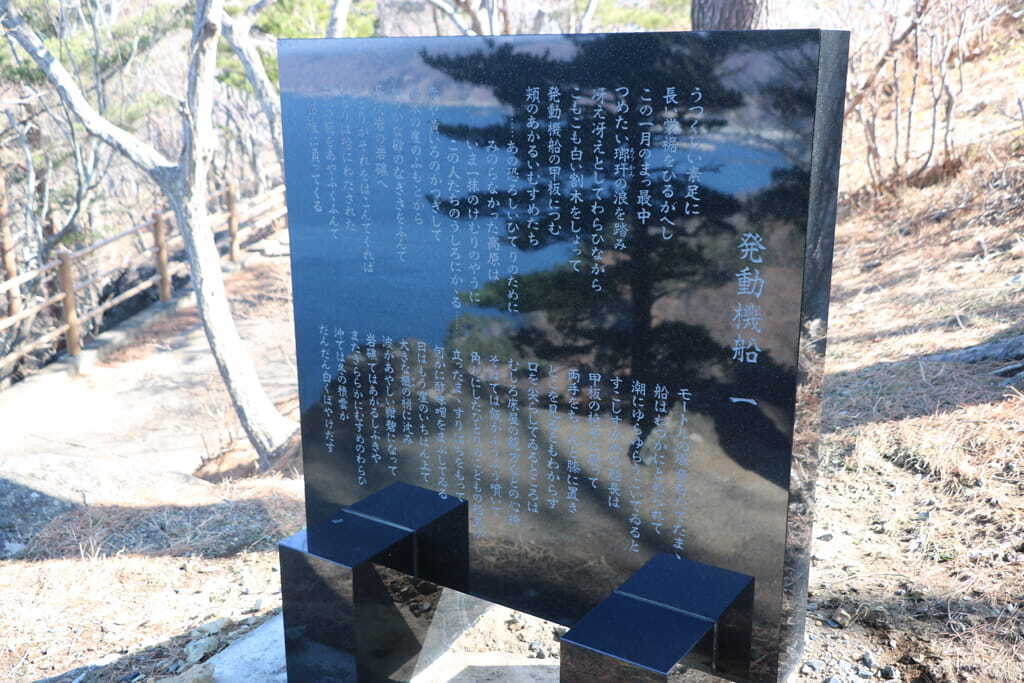
Miyazawa Kenji's Poetry monuments
During his 1925 journey along the Sanriku coast, poet Kenji Miyazawa is said to have walked along the shore and sketched the scenery from a motorboat. It is widely believed that he boarded at Horinai Port and that Nedari Beach served as the setting. Poetry monuments commemorating his visit can be found at Matsuiso Park and Kurosaki Viewpoint. This is a popular walking spot for literature enthusiasts.
-
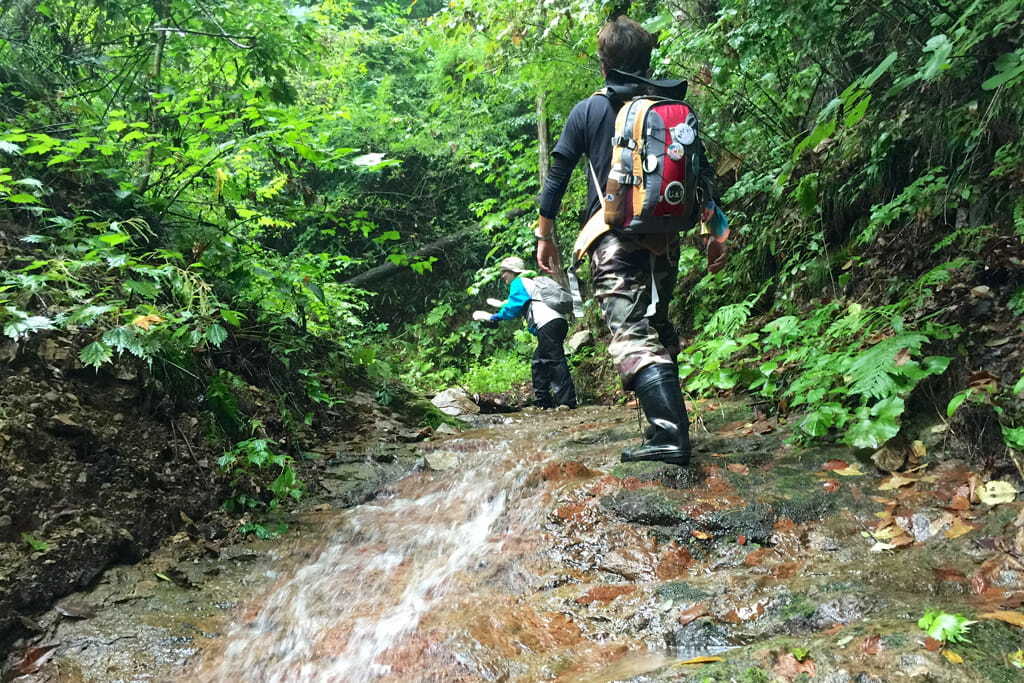
Mt. Urube
A signature route in the Fudai section features walking through streams, offering an adventurous experience with an elevation gain of over 180 meters. The northern side begins with stream crossings, while the southern side starts with stream climbing, stimulating hikers’ sense of adventure. Waterproof gear is recommended as shoes will get wet. A forest road runs parallel to the stream, allowing route choices based on fitness level and weather conditions. As bears may appear in the area, proper preparation and caution are essential.
-
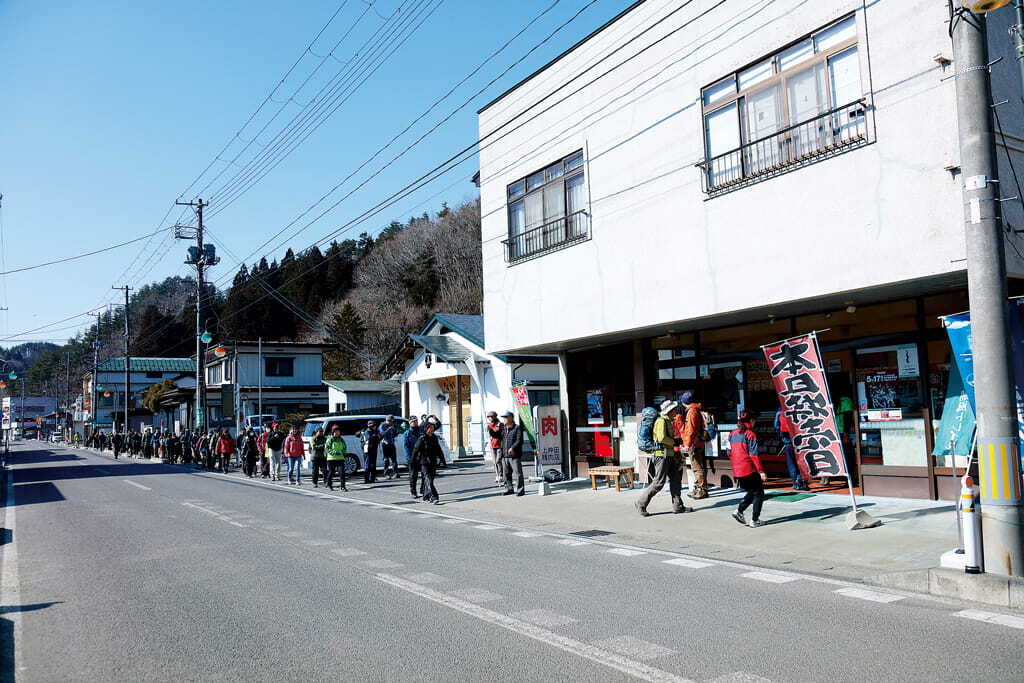
Fudai Abbey Road Shopping Street
The main street of Fudai Village is a convenient shopping district offering everything from food and daily necessities to electronics. Many shops warmly support hikers by providing services such as restrooms and water, making it easy to stop and chat. There is also a wide selection of products made with local specialty kelp, perfect for souvenirs. For commemorative photos, the crosswalk in front of Shimokawara Shoten is recommended.
-
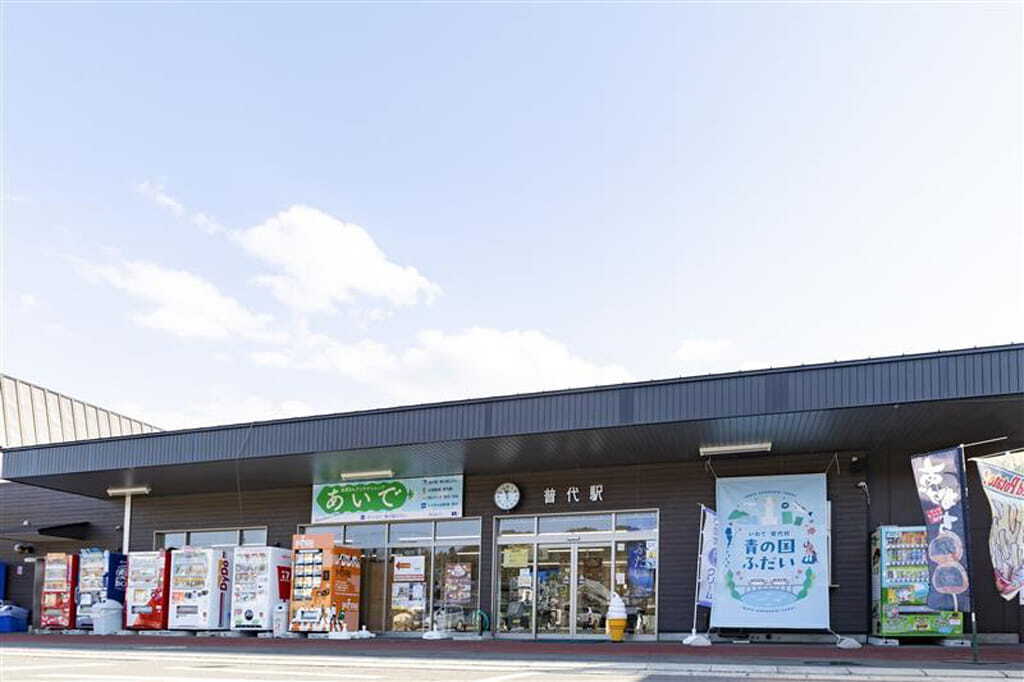
Sanriku Railway Fudai Station
A convenient base station for completing the Michinoku Coastal Trail. It has a large free parking lot and can be accessed even without using the railway. Tourist and trail information services are well provided. The adjacent Roadside Station Aonokuni Fudai offers a variety of local specialties, making it ideal for souvenir shopping. At night, the glow of bars adds to the travel atmosphere.
-
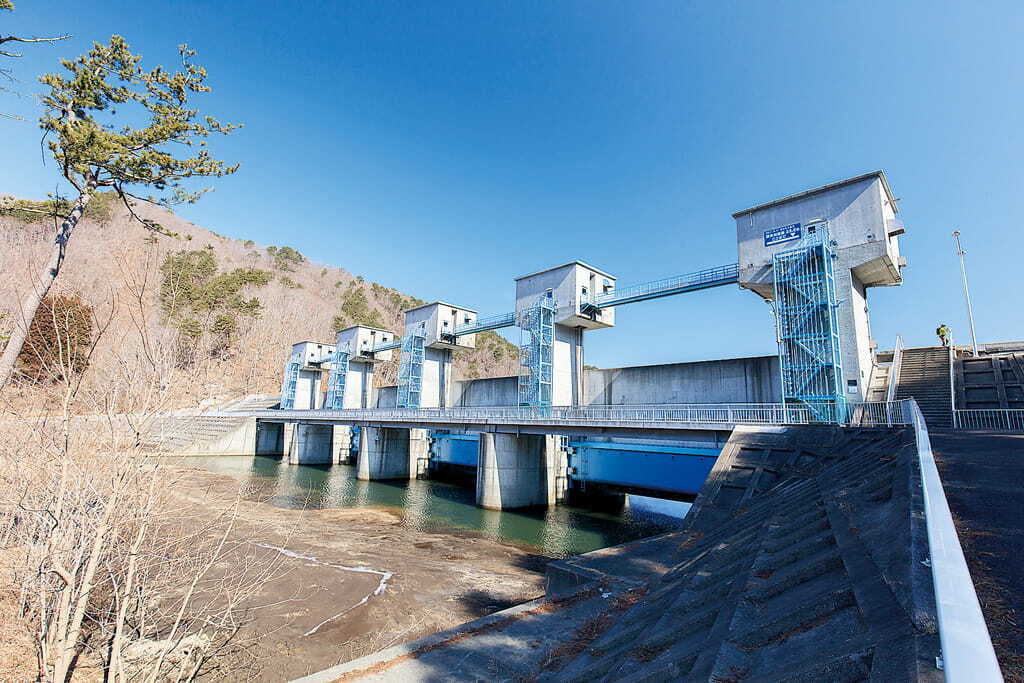
Fudai Floodgate
Construction began in 1972 and was completed in 1984 at a total cost of 3.56 billion yen. With a total length of 205 meters and a height of 15.5 meters, it is a massive disaster prevention facility. Its four floodgates and two land floodgates are remotely operated from a fire substation and significantly reduced the force of the tsunami. Although water overflowed, it prevented devastating damage to the settlement and stands as a symbol of protection for the community. Nearby is a monument honoring the former village mayor who led its construction.
-
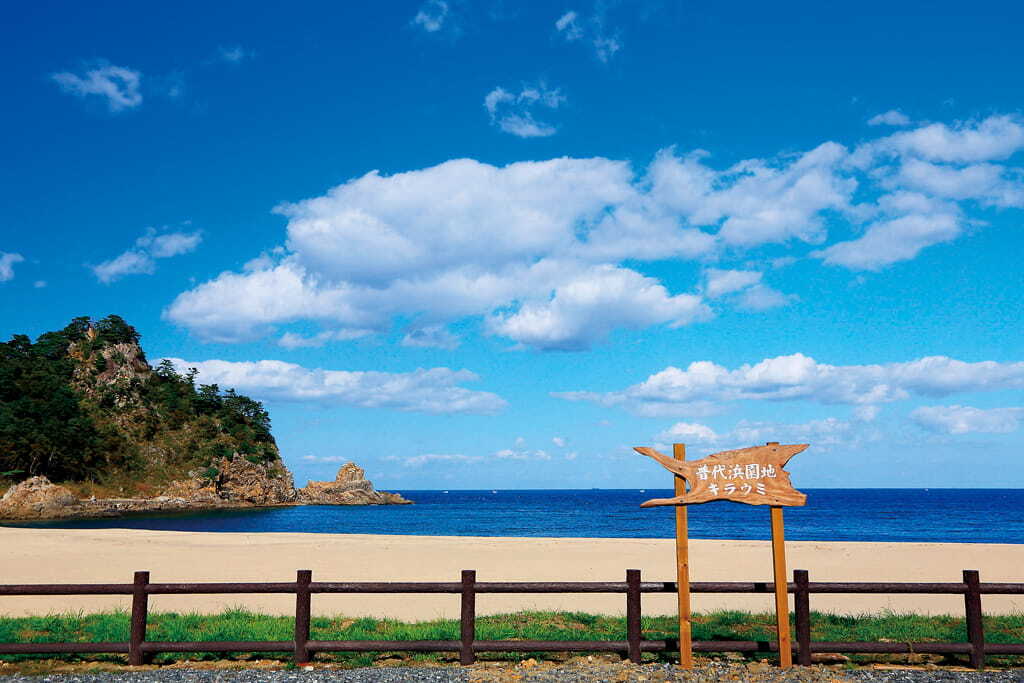
Fudai Beachside Park Kiraumi
This seaside park was developed as part of post–Great East Japan Earthquake reconstruction on the site of a former campground. On the north side of the Fudai River, there is a rest area with hot showers and toilets, while the south side features pilgrimage markers and a local produce market. A rare white-sand beach stretches along the Sanriku coast, and the nickname “Kiraumi” was given by local junior high school students.
-
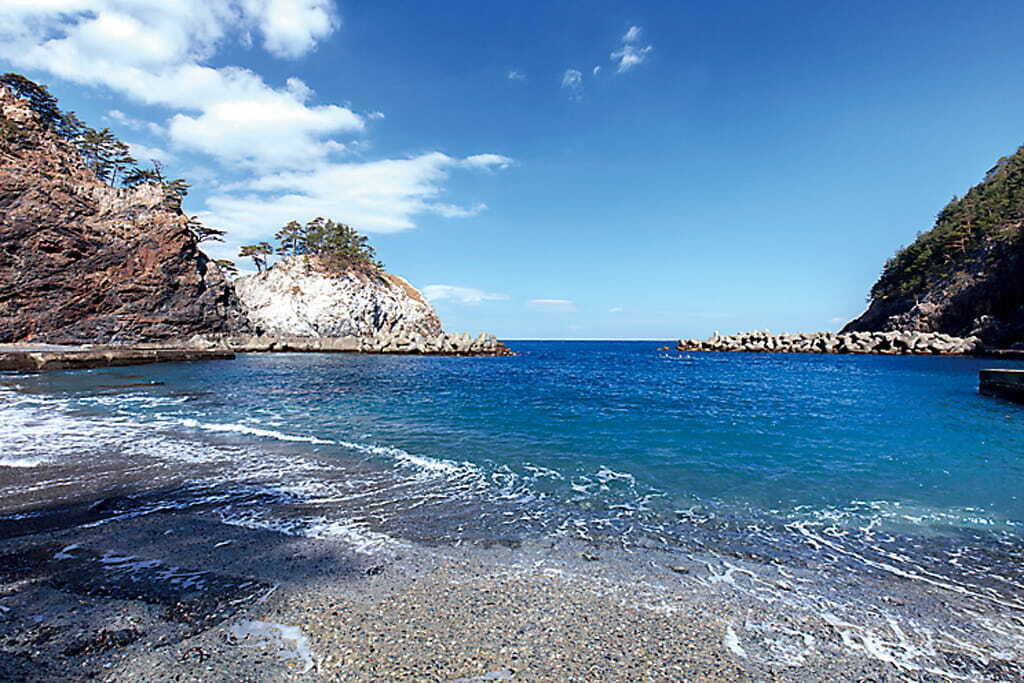
Nedari Beach
Located directly beneath the dramatic cliffs of Kurosaki, this scenic spot offers soothing coastal views. Among the dark rocks, a striking white islet stands out, though the reason for its color remains unknown. It is also known as a popular spot for rock fishing. With rest facilities and toilets available, it is ideal for walking and photography.
-
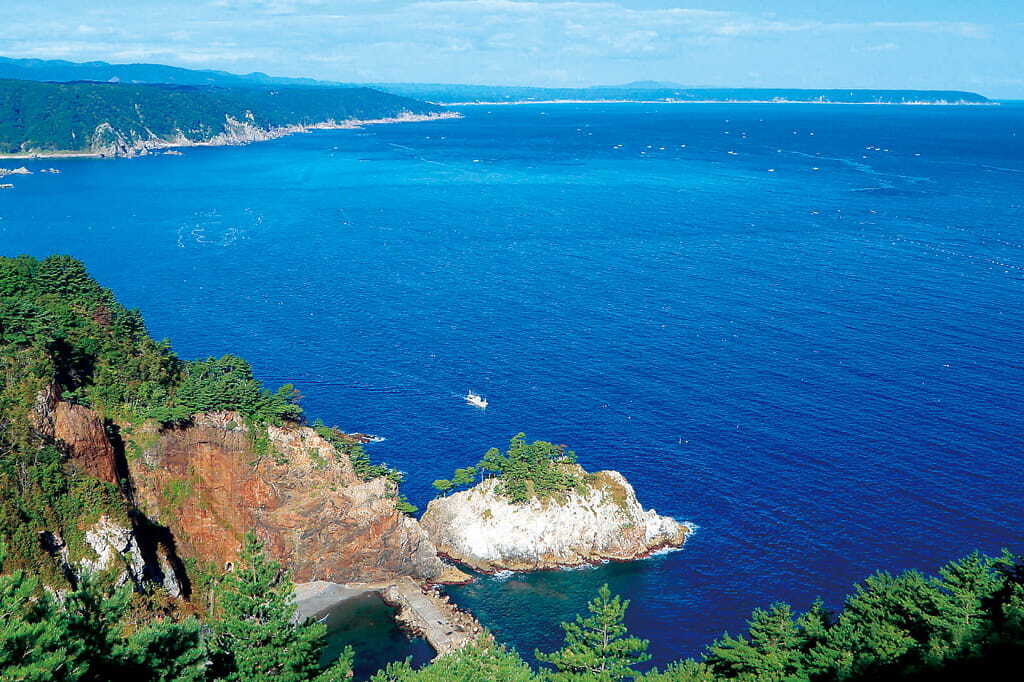
Kurosaki Viewpoint
Situated at an elevation of about 150 meters, this is one of Fudai Village’s most scenic viewpoints, offering a panoramic view of the Sanriku coastline stretching toward Kuji City. It is said to be the origin of the name “Aonokuni Fudai.” In spring, azaleas bloom, and in summer, you can see the white sea fog called "Yamase" rolling in. The area is also designated as an Important Cultural Landscape by Japan’s Agency for Cultural Affairs.
-
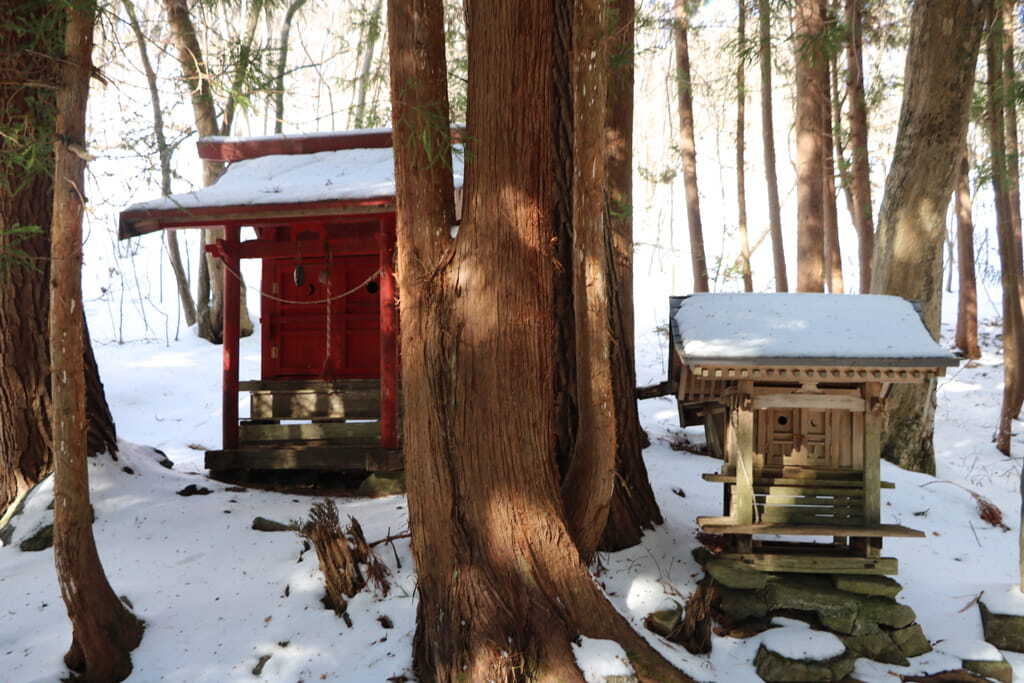
Kiyokawa Haguro Gongen and Tokuro-sama (small shrines)
The Torii area is rich in historical romance, deeply connected to the legend of Minamoto no Yoshitsune’s Northern Journey. At Kiyokawa Haguro Gongen, three mountain ascetics who are said to have protected Yoshitsune are enshrined. There is also a legend that Tokuro Morinaga, who pursued Yoshitsune, was so moved by his character that he became his retainer and was later enshrined as Tokuro. This area is known as the northernmost place where such mountain ascetic legends are told.
-
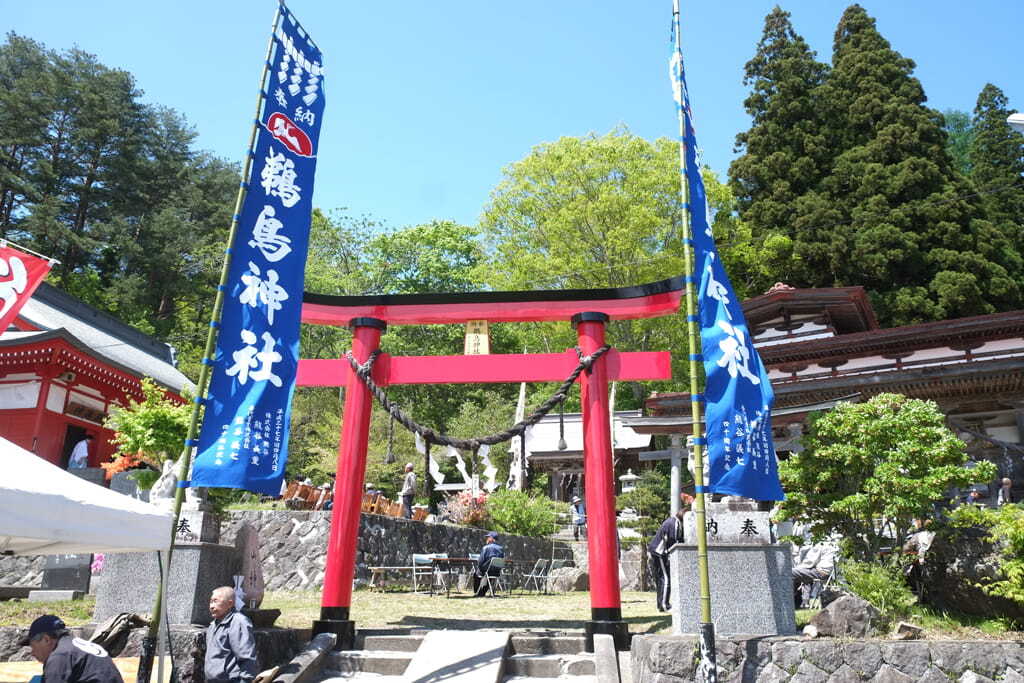
Unotori Shrine
Known as one of Fudai Village’s foremost spiritual spots, this shrine is located at the summit of Mt. Unotori. It is worshipped as a deity of maritime safety, matchmaking, and safe childbirth, and is also associated with the Yoshitsune legend and stories of romantic fulfillment. At the worship hall, visitors can try a rare fortune slip said to yield a “great-great blessing.”
-
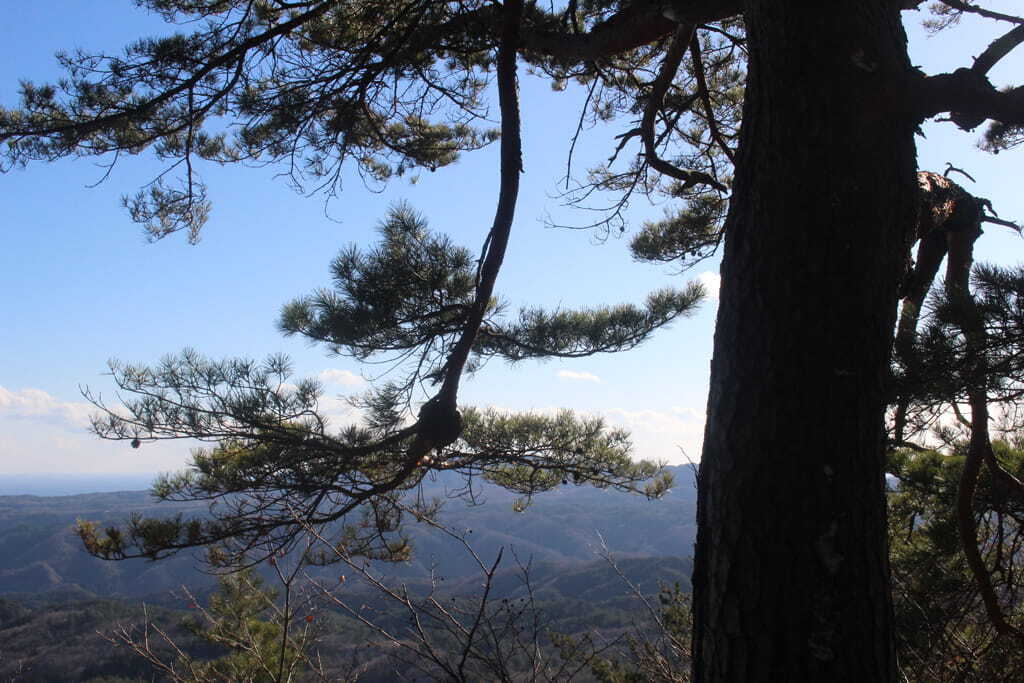
Tying pine branches at Mt. Unetori
Originating from the custom of tying pine branches to pray for safe fishing, this mystical site came to be revered as a place for matchmaking blessings. Men tie branches with their left hand, women with their right, and it is said that if the branch does not wither and continues to grow, the wish will come true. Around the inner shrine, many pine trees bear knots from past prayers, reflecting a long history of devotion.